
【書報討論】105/3/10 國立成功大學機械工程學系 楊天祥教授
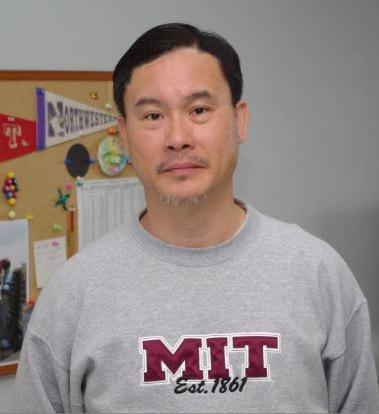
Some say Theodore von Kármán once made the statement quoted in the title of this talk. As a fan of his, here I offer my own testimonies for that statement, using some recent—and practical—theoretical works of ours. Specifically, in this talk I shall start with a brief discussion on thermal analysis of a “laser peeling” technique (for removing micro edge cracks of ultrathin glass substrates for roll-to-roll processing of, say, cover glass of 3C products). Then I will speak quickly on analytic estimation of the overall photovoltaic conversion efficiency and hot-spot temperature of high-concentration photovoltaic (HCPV) modules, and finally on nonlinear dynamics of a model system of “valveless pumping” (which has interesting biomedical and microfluidic applications).
As will be illustrated in this talk, the three problems mentioned above all have interesting and immediate industrial applications. Moreover, while such problems typically involve several intricate physical mechanisms that are nonlinearly coupled, greatly—but hopefully not overly—simplified mathematical models still can be constructed by retaining only the more important mechanisms and trimming the rest with care. Then, using suitable analytic and numerical tools (and some relevant experimental data for validation and/or parameter calibration purposes), we can interrogate the simplified models, so as to bring about a deep understanding of the practical systems they adequately model.
In short, with the three aforementioned interesting problems, I hope to demonstrate that a good theory not only sheds light on how practical processes work, it also helps expedite technological development. And most of all, pursuing a good theory is fun in its own right!